Inclusive Tuner HapTone for Visually Impaired Musicians
HapTone: how the project began
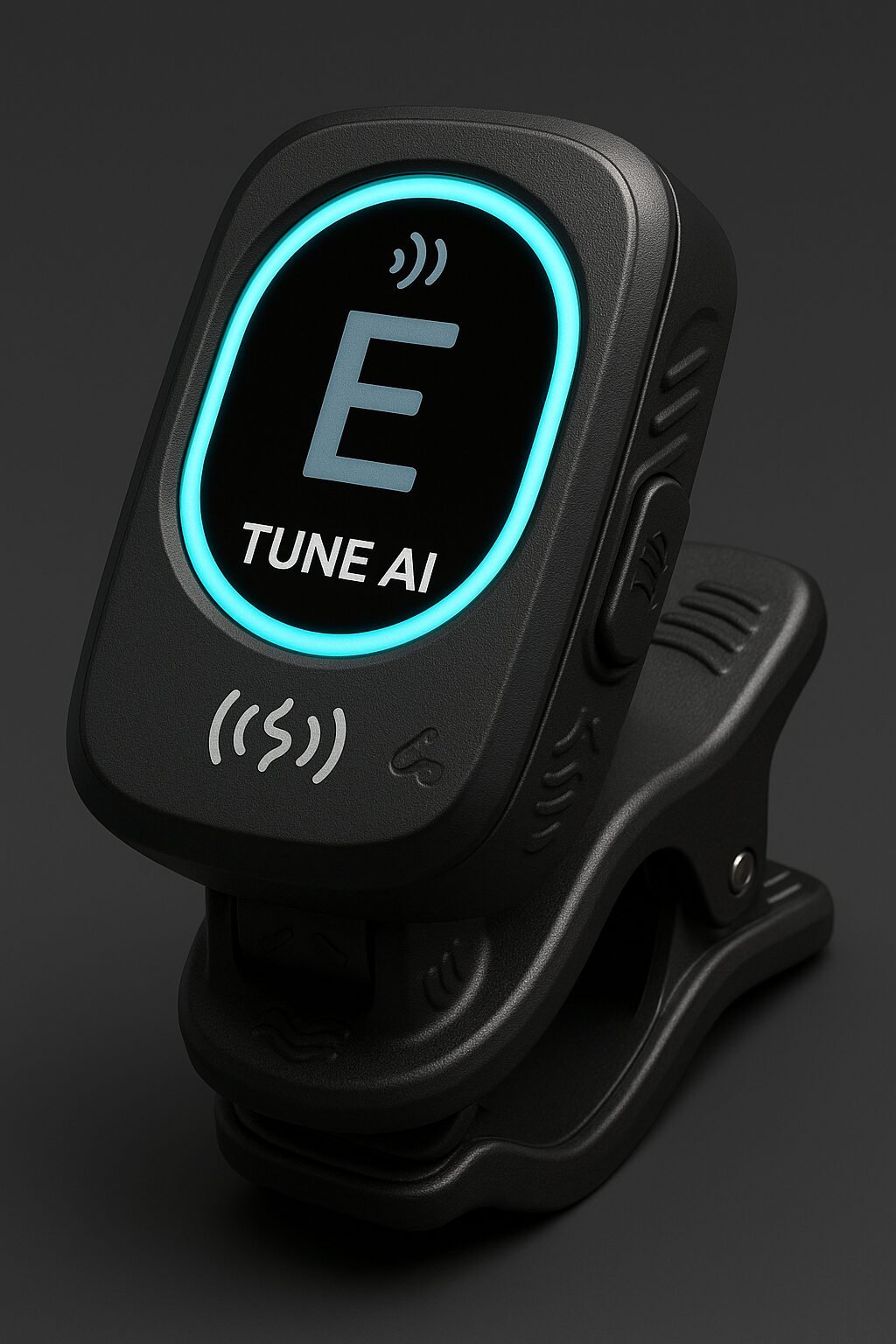
Tuning an instrument should be possible without reading a needle or a screen. That is the starting point for HapTone, our tuner project for blind and partially sighted musicians, first introduced under the name Tune AI.
This article looks back at the original idea. For the hardware and software work that followed, read our May 2026 progress report.
A need rooted in playing music
After losing his sight in 2017, Blind Systems founder Amine Khettat found that tuners based on a visual display no longer suited his musical practice. He wanted to tune without asking someone else to read the screen.
That experience gave the project its direction: convey information through touch and sound, with controls that can be located without sight.
The interactions being explored
- Haptic feedback: vibrations to indicate whether a note is flat, sharp or close to the target frequency.
- Voice feedback: announce the note and the detected pitch difference, either on the device or through a phone, depending on the final configuration.
- Tactile controls: make the device usable without relying on a visual display.
- Controlled costs: consider manufacturing cost when choosing components. A retail price has yet to be set.
From an idea to a prototype
In 2025, the work focused on designing an initial prototype. The questions were practical: which sensor to use, how to distinguish vibration patterns and how to make the device comfortable during a music session.
The project has since progressed with Polytech’ Paris-Saclay. The May 2026 report describes audio acquisition and pitch-detection experiments. Decisions about the enclosure, configuration and integration still depend on technical results and feedback from musicians.
HapTone remains in development. No commercial release date has been announced.
Contribute to HapTone
Are you a musician, teacher, embedded developer or product designer? Feedback on how you tune an instrument can be as useful to us as a technical contribution.
Contact us with your instrument, playing context or the area in which you would like to contribute.